Can You Fight a Refuse Roadside Breath Test?
Roadside Breath Test Refusal — Why Wasn’t the Breath Sample Provided?
Most drivers will provide a roadside breath sample when required by police. So when a roadside breath test ends in a refusal charge, the question is: why wasn’t the sample provided?
There is often more to the story than simply saying the driver refused. Something happened that resulted in the roadside test not being provided. Our job is to listen to your explanation, investigate what happened, and build a strong defence to fight the refusal charge.
Where you need to speak to a lawyer about a refused roadside test, call 416-731-7113.
Roadside Breath Test Refusal & Experience
At Charitsis Law, as impaired driving lawyers our focus is on drinking and driving cases, including roadside breath test refusal charges.
Led by former Crown Attorney Nicholas Charitsis, our lawyers bring more than 25 years of criminal law and courtroom experience. We know the requirements placed upon police when conducting roadside breath testing and we know how to fight these charges.
Our reputation is supported by hundreds of client reviews on Google and other independent review websites. We focus on building a strong defence, challenging the refusal charge and winning your case.
There was a reason the breath sample wasn’t provided. Let’s talk about it. Call 416-731-7113 and speak with Nicholas Charitsis about what happened and how your refusal charge can be fought.
What Happens After Refusing a Roadside Breath Test?
Ontario changed some impaired driving penalties effective July 1, 2026. Under the current Ontario rules, refusing or failing to comply with a roadside breath test demand can result in immediate penalties before the criminal charge is decided in court.
For a first occurrence, the immediate consequences include:
- 90-day driver’s licence suspension — Your licence is suspended immediately.
- 7-day vehicle impoundment — The vehicle is towed and held for seven days.
- $550 provincial penalty — This administrative penalty is separate from any fine imposed after a criminal conviction.
- 8-hour education course — Ontario requires completion of an education program.
- Additional costs — You may also face towing, storage and driver’s licence reinstatement costs.
These are administrative roadside penalties. They are separate from the criminal charge under section 320.15 of the Criminal Code and the additional penalties that can follow if you are convicted.
That is why a refusal charge can affect you immediately, even though your case has not yet gone to trial. The next section explains the criminal penalties for a conviction for refusing a roadside breath test.
Refuse Roadside Breath Test Penalties
A conviction for refusing or failing to comply with a lawful roadside breath demand is a criminal offence. The penalties are serious and include a criminal record, a substantial fine, loss of your driver’s licence, ignition interlock requirements, and jail for repeat offences.
For a first offence, and for subsequent offences, the consequences can include:
- Criminal record — A conviction results in a criminal record that can affect employment, professional licensing and travel.
- Minimum $2,000 fine for a first offence — Refusing or failing to comply with a lawful breath demand carries a mandatory minimum fine of $2,000 for a first offence.
- Driving prohibition — The court imposes a driving prohibition following a conviction, in addition to provincial driver’s licence consequences.
- Ontario driver’s licence suspension — A conviction can result in the suspension of your driver’s licence under Ontario law.
- Ignition interlock requirements — Ontario’s ignition interlock rules require an approved interlock device to be installed before or after you regain driving privileges.
- Jail for repeat offences — A second offence carries a minimum 30-day jail sentence. Subsequent offences carry a minimum 120-day sentence.
Unlike a Drive Over 80 charge, a refusal charge does not depend on the police obtaining a blood alcohol reading over the legal limit. The refusal is the basis of the criminal charge when the Crown Attorney proves the legal requirements of the offence.
That is why the roadside investigation matters. As criminal defence lawyers we’ll examine the breath demand, the police officer’s instructions, your attempts to provide a roadside breath sample, the Approved Screening Device (ASD), and why the test was not completed.
What Is Refusing a Roadside Breath Test?
When failing to provide a roadside breath sample can result in a criminal charge.
Under section 320.15 of the Criminal Code of Canada, it is a criminal offence to fail or refuse to comply with a lawful breath demand without a reasonable excuse. For a roadside breath test, police are alleging that the driver was legally required to provide a breath sample and failed or refused to do so.
The roadside test is normally conducted using an Approved Screening Device (ASD). The purpose of the test is to screen a driver’s breath for alcohol and determine whether further investigation is required.
When Can Police Demand a Roadside Breath Test?
Under section 320.27 of the Criminal Code, police can demand an immediate roadside breath sample in two different situations:
- Reasonable suspicion of alcohol — An officer may demand a roadside breath sample when there are reasonable grounds to suspect that a driver has alcohol in their body. For example, the officer may smell alcohol or the driver may admit to drinking. The officer does not have to already believe the driver is impaired.
- Mandatory alcohol screening — An officer who has an Approved Screening Device in their possession may demand an immediate breath sample from a driver during the lawful exercise of police powers. In this situation, the officer does not need to smell alcohol, receive an admission of drinking, or otherwise suspect that the driver has consumed alcohol.
In either situation, the roadside breath demand must meet the requirements of the Criminal Code. Once a lawful demand is made, the driver is required to provide the breath sample immediately. Failing or refusing to provide the required sample without a reasonable excuse results in a criminal refusal charge.
What Counts as Refusing a Roadside Test?
Why a refusal charge does not always mean the driver simply said no.
A roadside breath test refusal does not always mean that a driver simply said, “No, I won’t take the test.” Many refusal charges arise when a driver was willing to provide a breath sample but, for some reason, the roadside test was not successfully completed.
Police may allege that you refused or failed to provide a roadside breath sample where you:
- Says they will not provide a sample.
- Tries to blow but does not provide a suitable sample.
- Stops blowing too soon or allegedly does not blow hard enough.
- Delays or does not follow the officer’s instructions.
- Makes several unsuccessful attempts and the officer concludes they are refusing.
- Appears to cooperate, but the Approved Screening Device does not register a proper sample.
This is particularly valuable because it leads directly into the defence issues we’ve already developed: Did you actually refuse? Did you understand the demand? Were you trying? Was there a physical problem? Were the instructions clear? Did the officer give you enough opportunities?
Roadside Breath Test vs. Breathalyzer Refusal
Why the type of breath test matters when you are charged with refusal.
A roadside breath test and a breathalyzer test at the police station are not the same test. The difference is important when dealing with a refusal charge.
- A roadside breath test is usually conducted using an Approved Screening Device (ASD). The officer uses the device at the roadside to screen a driver for alcohol.
- A breathalyzer test generally refers to evidentiary breath testing conducted after a driver has been arrested and taken to the police station. These breath samples can be used as evidence of the driver’s blood alcohol concentration in court.
A driver can be charged with refusing or failing to provide a breath sample at either stage. However, where the alleged refusal happened can affect the evidence, police procedures, and defence strategy.
If your charge involves refusing to provide breath samples after arrest, read our guide to refusing a breathalyzer test in Ontario.
This page focuses on refusing or failing to provide a roadside breath sample using an Approved Screening Device.
Fighting a Roadside Breath Test Refusal Charge
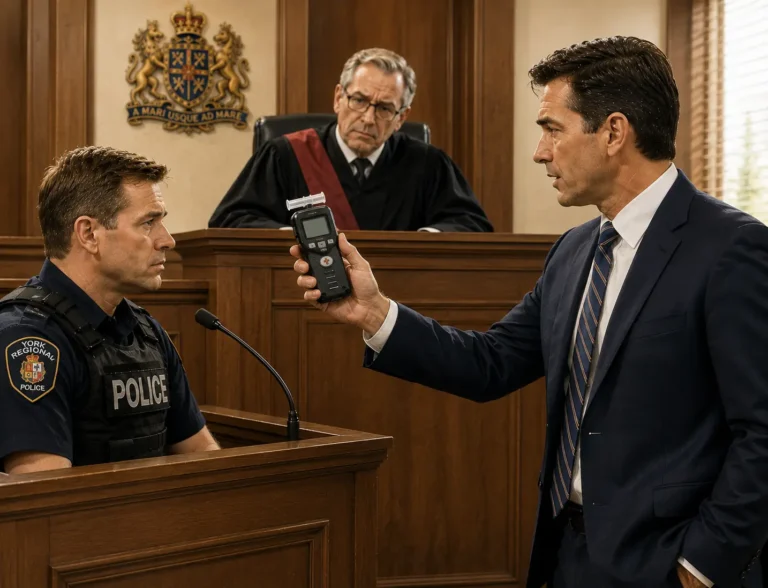
We cross-examine the police officer and put their version of what happened at the roadside to the test.
Most drivers comply with a roadside breath demand and provide a sample. When that does not happen, there’s usually a reason. Something occurred between the police officer and the driver that resulted in the test not being completed and a refusal charge being laid.
Where a refuse roadside test charge goes to trial, we will closely scrutinize the police officer’s evidence.
We’ll aggressively cross-examine the officer why the roadside breath demand was lawful, exactly what the driver was told, whether the demand was properly explained, what instructions were given, how many opportunities the driver had to provide a sample, and why the officer ultimately decided that the driver was refusing.
The police officer should be able to explain why a routine roadside breath test ended in a criminal refusal charge. Was the problem with the driver, the Approved Screening Device, the officer’s instructions, or the way the officer handled the roadside interaction? Those are questions we can put directly to the officer in court.
Was the Roadside Breath Demand Lawful?
Our first line of attack may be the breath demand itself. Before someone can be convicted of refusing a roadside breath test, the Crown Attorney must establish that police had the legal authority to make the demand.
We will examine why the vehicle was stopped and what authority the officer relied upon to demand the breath sample. Depending on the circumstances, the demand may have been based on reasonable suspicion of alcohol or Canada’s mandatory alcohol screening laws.
If the legal requirements for the roadside breath demand were not met, we can challenge the demand and the evidence arising from it.
Did the Driver Know a Breath Demand Had Been Made?
Section 320.15 of the Criminal Code applies where a person, knowing that a demand has been made, fails or refuses to comply. What the officer actually said and what the driver understood can therefore become critical evidence.
We will examine:
- What exactly did the police officer say?
- Was the roadside breath demand clearly communicated?
- Did the driver understand and “know” what was required?
- Was there a language barrier?
- Was the driver confused, frightened or having difficulty understanding the officer?
- Did the officer explain the consequences of failing to provide the required sample?
If the Crown cannot prove that the driver knew a demand had been made, that can become an important issue in fighting the refusal charge.
Did the Driver Actually Refuse to Provide a Breath Sample?
Not producing a suitable roadside breath sample does not necessarily tell the court why the sample was not provided.
We will look closely at what the driver actually did:
- Did the driver say they would not provide a sample?
- Was the driver trying to comply?
- How many attempts were made?
- Were proper instructions and demonstrations given?
- Was the driver having difficulty blowing into the device?
- Did the Approved Screening Device (ASD) register airflow?
- Did the officer give the driver reasonable opportunities to succeed?
- Did the officer decide too quickly that the driver was refusing?
These details can help distinguish an intentional refusal from a driver who was attempting to comply but could not provide a suitable breath sample.
Was There a Reasonable Excuse?
Section 320.15 also requires the failure or refusal to be “without a reasonable excuse“.
A medical condition or physical limitation may explain why someone could not provide the required breath sample. The driver’s condition and everything that happened during the roadside interaction need to be considered.
Having a reason does not automatically mean there was a reasonable excuse in law. However, the reason why the sample was not provided can become an important part of the defence.
Cross-Examining Police Officers
The police officer’s evidence can be one of the most important parts of a roadside refusal trial. We will cross-examine the officer about the traffic stop, breath demand, instructions, operation of the Approved Screening Device, attempts to obtain a sample, and the decision to lay the refusal charge.
We compare that testimony with the officer’s notes, body-worn or in-car video where available, witness evidence and other disclosure. Inconsistencies, missing details or differences between the officer’s testimony and the other evidence can be used to challenge the reliability of the officer’s version of events.
Your Explanation in a Roadside Refusal Trial
How your evidence can explain why the roadside breath test ended in a refusal charge.
Your explanation is important. A roadside refusal trial gives you the opportunity, if you testify, to tell the judge what happened and explain why the roadside breath sample was not provided.
The police officer may believe that you refused to provide a breath sample. Your explanation can be very different. You can explain:
- You tried to provide the roadside breath sample.
- You did not understand the officer’s instructions.
- You were confused about what the officer wanted you to do.
- You were willing to take the test but could not provide a suitable sample.
- A medical or physical condition affected your ability to provide a sample.
- Something the officer said or did made it difficult for you to comply.
- You had a reasonable excuse for not providing the required breath sample.
This gives the judge an opportunity to hear both versions of what happened. The police officer can honestly believe that you refused, while you can honestly explain that you were trying to comply or had a reason why you could not complete the roadside breath test.
How R. v. W.(D.) Applies to Roadside Refusal Charges
How reasonable doubt applies when the driver and police give different evidence
R. v. W.(D.) is an important Supreme Court of Canada decision about reasonable doubt when a judge hears different versions of what happened.
The judge does not simply choose between the police officer and the accused. If the judge believes your evidence and it provides a defence, you must be acquitted.
Even if the judge does not fully accept your evidence, your explanation can still raise a reasonable doubt. The Crown Attorney always has the burden of proving the roadside refusal charge beyond a reasonable doubt.
The police officer does not have to be dishonest for their evidence to be challenged. The officer can be mistaken, misunderstand what you were trying to do, or remember the roadside interaction differently.
If your explanation leaves the judge with a reasonable doubt about whether you knowingly failed or refused to comply with a lawful roadside breath demand without a reasonable excuse, the Crown has not proven the charge beyond a reasonable doubt.
Let’s put the whole case together. The police evidence, disclosure, what the Crown Attorney is saying, and match it up with your version of events. Let us show you how we can defend your charge.
If you are facing a refusal charge in Ontario, call our DUI defence team today at 416-731-7113 to schedule a confidential case review. There is no obligation to call. We will carefully review your documents, answer your questions directly, and explain your options clearly so you can make an informed decision about how to proceed.
Serving Clients Across the GTA and Central Ontario
If you are facing a refuse roadside breath test charge or any drinking and driving offence, Charitsis Law represents clients throughout Southern Ontario. Meet with an experienced criminal defence lawyer at our offices in Brampton, Oshawa, Aurora, Newmarket, or Muskoka, or contact us to discuss your case and the court process.
Discuss your case with a Toronto DUI Lawyer

Being charged with refusing a roadside breath test does not mean you’ll be convicted.
Call former Crown Attorney Nicholas Charitsis at 416-731-7113 to discuss your case, understand your options, and get qualified legal advice.
After 25 years of defending DUI cases in Toronto, I can tell you how we can fight this charge for you.
FAQ for Refusing Roadside Breath Tests
Being charged with refusing a roadside breath test can be confusing. These frequently asked questions answer the concerns we hear most often from people facing these criminal charges.
Q. Can I refuse a roadside breath test in Ontario?
A. No. If a police officer makes a lawful roadside breath demand, you are required to provide a breath sample. Refusing or failing to provide the sample without a reasonable excuse can result in a criminal charge under section 320.15 of the Criminal Code.
However, being charged does not mean you will be convicted. The Crown Attorney must still prove that the breath demand was lawful and that you knowingly failed or refused to provide the required sample without a reasonable excuse.
Q. Can police demand a roadside breath test without smelling alcohol or seeing signs of impairment?
A. Yes. Under Canada’s mandatory alcohol screening laws, a police officer can demand a roadside breath sample without smelling alcohol or seeing signs that you are impaired.
The officer must have lawfully stopped your vehicle and have an Approved Screening Device available. If these requirements are met, the officer does not need reasonable suspicion that you have been drinking before making the roadside breath test demand.
Q. Can I speak to a lawyer before taking a roadside breath test?
A. Usually, no. A roadside breath test is meant to be done immediately. Police generally do not have to let you speak with a lawyer before you provide a roadside breath sample using an Approved Screening Device.
If you are arrested and taken to the police station for further breath testing, you generally have the right to speak with a lawyer before providing those breath samples.
Q. What happens if I refuse a roadside breath test in Ontario?
A. Refusing a lawful roadside breath test can result in immediate penalties and a criminal charge. For a first occurrence, Ontario imposes an immediate 90-day driver’s licence suspension, a 7-day vehicle impoundment, a $550 administrative penalty, and an education program.
You will also be charged with refusing or failing to provide a breath sample under section 320.15 of the Criminal Code. These immediate roadside penalties apply before the criminal charge is decided in court.
Q. What if I tried to provide a roadside breath sample but couldn’t?
A. Trying to provide a breath sample is not the same as refusing to provide one. Sometimes a driver tries to blow into the Approved Screening Device but cannot provide a suitable sample.
The reason matters. The officer’s instructions, the number of attempts, how you tried to provide the sample, a medical or physical problem, and whether the device was working properly can all become important evidence.
If you were trying to comply but could not complete the roadside breath test, your explanation may form an important part of your defence.
Q. How many chances should police give me to provide a roadside breath sample?
A. There is no fixed number of attempts that applies to every roadside breath test. The officer should give you clear instructions and a reasonable opportunity to provide a proper breath sample.
If you are trying to comply, the officer should consider what is happening before deciding that you are refusing. Your attempts, the officer’s instructions, how much time you were given, and why a sample was not provided can all become important evidence.
If the officer ended the test too quickly, that may be an issue when fighting a roadside breath test refusal charge.
Q. What is a reasonable excuse for not providing a roadside breath sample?
A. A reasonable excuse is a genuine reason that prevented you from providing the required breath sample. Simply deciding that you did not want to take the roadside breath test is not a reasonable excuse.
A medical or physical condition can be important if it prevented you from providing a suitable sample. Confusion, a language barrier, difficulty understanding the officer’s instructions, or something that happened during the roadside interaction may also be relevant, depending on the circumstances.
The court will consider what happened and why you were unable to comply with the roadside breath demand.
Q. Can a roadside breath test refusal charge be beaten in court?
A. Yes. A roadside breath test refusal charge can be successfully defended if the Crown Attorney cannot prove every part of the charge beyond a reasonable doubt.
The defence may challenge whether the breath demand was lawful, whether you understood what was required, whether you actually refused, and whether you had a reasonable excuse for not providing a sample.
At trial, the police officer can be cross-examined about exactly what happened. Your explanation can also be important. If the evidence leaves the judge with a reasonable doubt about whether you knowingly refused or failed to comply with a lawful roadside breath demand, you must be found not guilty.
About DUI Lawyer Nicholas Charitsis
Nicholas Charitsis is a Toronto criminal defence lawyer and former Crown Attorney with more than 25 years of experience defending impaired driving and breath test refusal charges in Ontario.
His experience includes cases involving refusing roadside breath tests, breathalyzer refusals, Approved Screening Devices, police breath demands, medical issues, and whether a driver knowingly failed or refused to provide a breath sample.
In roadside refusal cases, Nicholas examines what happened between the driver and the police officer. This includes whether the breath demand was lawful, what instructions were given, whether the driver understood the demand, what attempts were made to provide a sample, and whether there was a reasonable excuse for not complying.
Where a refusal charge goes to trial, his defence strategy can include cross-examining the police officer about the roadside investigation and presenting the driver’s explanation of what happened. The goal is to determine whether the Crown Attorney can prove every part of the refusal charge beyond a reasonable doubt.
Nicholas also serves as Chair of Ontario committees involved in recommending candidates for judicial and Justice of the Peace appointments. His combination of former Crown experience, courtroom experience, and more than 25 years practising criminal law provides clients with experienced legal advice when deciding how to fight a roadside breath test refusal charge.